Stanford University/Summer 2026
PSYCH 131S: The Developing Mind
How humans learn, think, and communicate
About the course
PSYCH 131S is an introduction to developmental psychology, built around a simple question: how do human beings, starting as babies who cannot yet speak or walk, come to learn, think, and communicate the way we do? We look at the methods developmental scientists use to study minds we cannot interview, at what those methods have taught us, and at what the field still argues about.
The course is designed for undergraduates in their first years. No prior psychology background is assumed. We move quickly but stay grounded in concrete examples: recent studies and data, and observations of children out in the world.
The spine of the course is methodological. Every topic we take up, from early word learning to causal reasoning to what children infer about other minds, is attached to a another question: how could anyone know that, and how much confidence does the evidence license? Students leave the course knowing some developmental psychology, and, more importantly, able to interrogate a developmental claim: what was measured, on whom, how many times, whether the measure holds up, and whether the finding has survived other people's data and other labs.
What students take away
By the end of the term, students should be able to:
Know how developmental science knows things
- Explain how developmental cognitive scientists study minds that cannot yet speak and say what each method can and cannot license as a conclusion.
- Move from a construct to a measurement: take a question like does this child understand that other people can be wrong? and specify what observable behavior would count as evidence for it, and what would count against it.
- Identify the design choices that decide a study's fate: what was measured, on whom, how many children, how many trials, what was excluded, and when the exclusion rule was written down.
Do it yourself, on a real question
- Turn a partner's question into an answerable one, and be explicit about what you gave up to make it answerable.
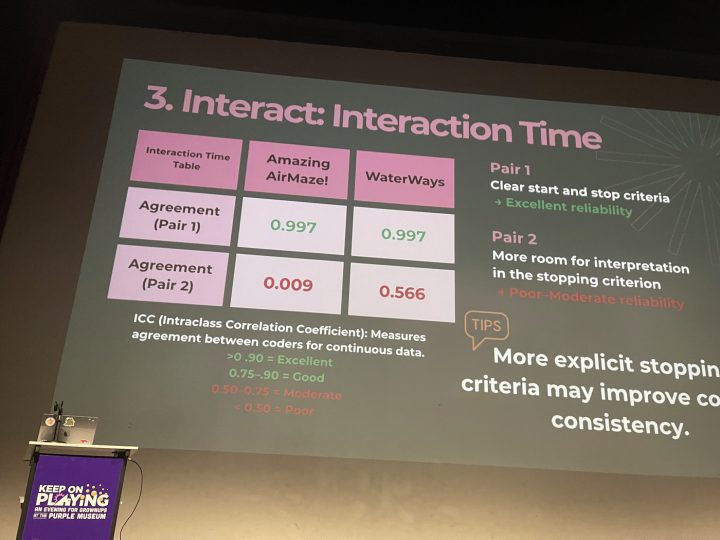
- Build an observational coding scheme, apply it alongside a teammate, check whether the two of you actually agree, and revise it when you don't. Reliability stops being an abstraction the first time two people watch the same child and write down different things.
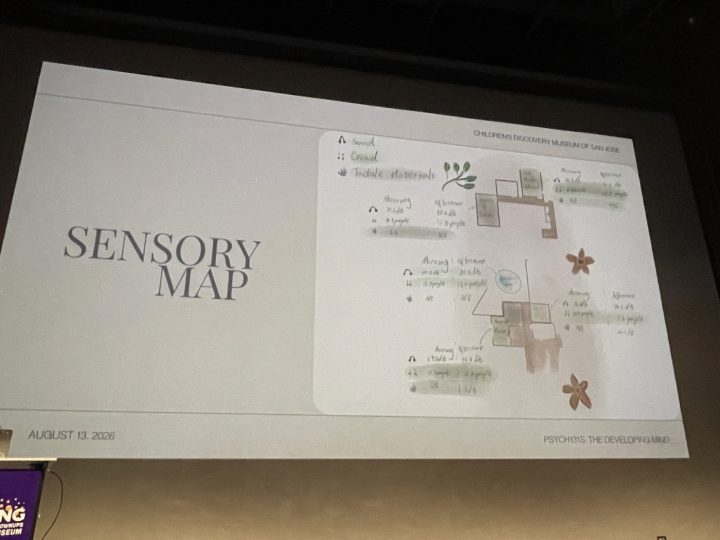
- Bring a developmental lens to a real setting where children learn, and notice what is happening beyond what a designer or a caregiver assumed would happen.
- Observe children ethically: what it means to study people who cannot consent for themselves, what you owe the families in the room, and what you owe an institution that let you in.
Say what you found, without lowering the bar
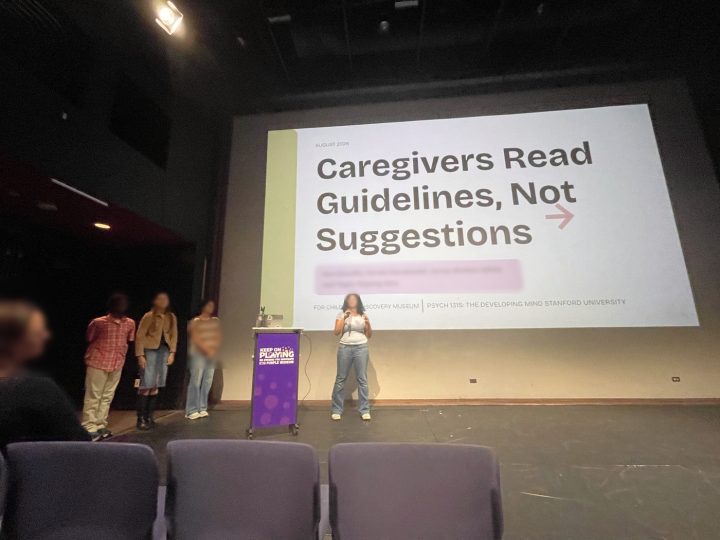
- Write and speak about developmental research for people who are not in the field, without losing the honesty of the science.
- Hold rigor and usefulness at the same time: tell an audience who would prefer a cleaner answer what one afternoon of watching a dozen children can support, and what it cannot.
- Tell the difference between an observation that raises a hypothesis and a result that tests one, and label which of the two you are handing to a partner.
- Ask who informal science learning reaches and who it does not, and what a sample of museum visitors on a weekday morning can support about “children” in general.
The methods thread
Rather than teaching methods once, in a week near the front, the course runs a single methodological thread through every unit. Each topic is introduced through a study we can take apart in the room: what the researchers did, what they counted, what they concluded, and what a careful reader is entitled to believe. We then follow what happened to that study afterwards (the direct replication, the failed replication, the re-analysis, the meta-analysis that pooled it with twenty others), so that students see a finding as something with a history rather than a fact in a textbook.
Three questions come back every week, and by the end students ask them on their own: Would the measure agree with itself? Would the analysis run the same way twice? Has anyone else seen this? They are the course's working definitions of reliability, reproducibility, and replicability, and students apply them both to published work and to their own museum data.
Students also work with the field's public infrastructure directly: large multi-lab replication reports, meta-analytic databases, and open datasets of children's language, so that “the evidence” is something they have handled themselves rather than something they have been told about.
Community-engaged component
The course is community-engaged, supported by a Graduate Community-Engaged Teaching (Grad CET) Fellowship from Stanford's Haas Center for Public Service, a Cardinal Course development grant, and the Summer Session program (2025–2026).
The community-engaged piece is not a field trip bolted onto a lecture course; it is where the methodological argument of the course gets tested. A museum's education staff need something they can act on, and a careful researcher can rarely give them something that clean. Students spend the second half of the term inside that tension: designing an observation that is honest enough to be worth doing and small enough to be possible, then reporting it to people who will use it without overstating what a handful of afternoons can support. Learning to keep the uncertainty attached when a real audience would rather you didn't is, in my view, the most transferable thing the course teaches.
Our community partner
Children's Discovery Museum of San Jose
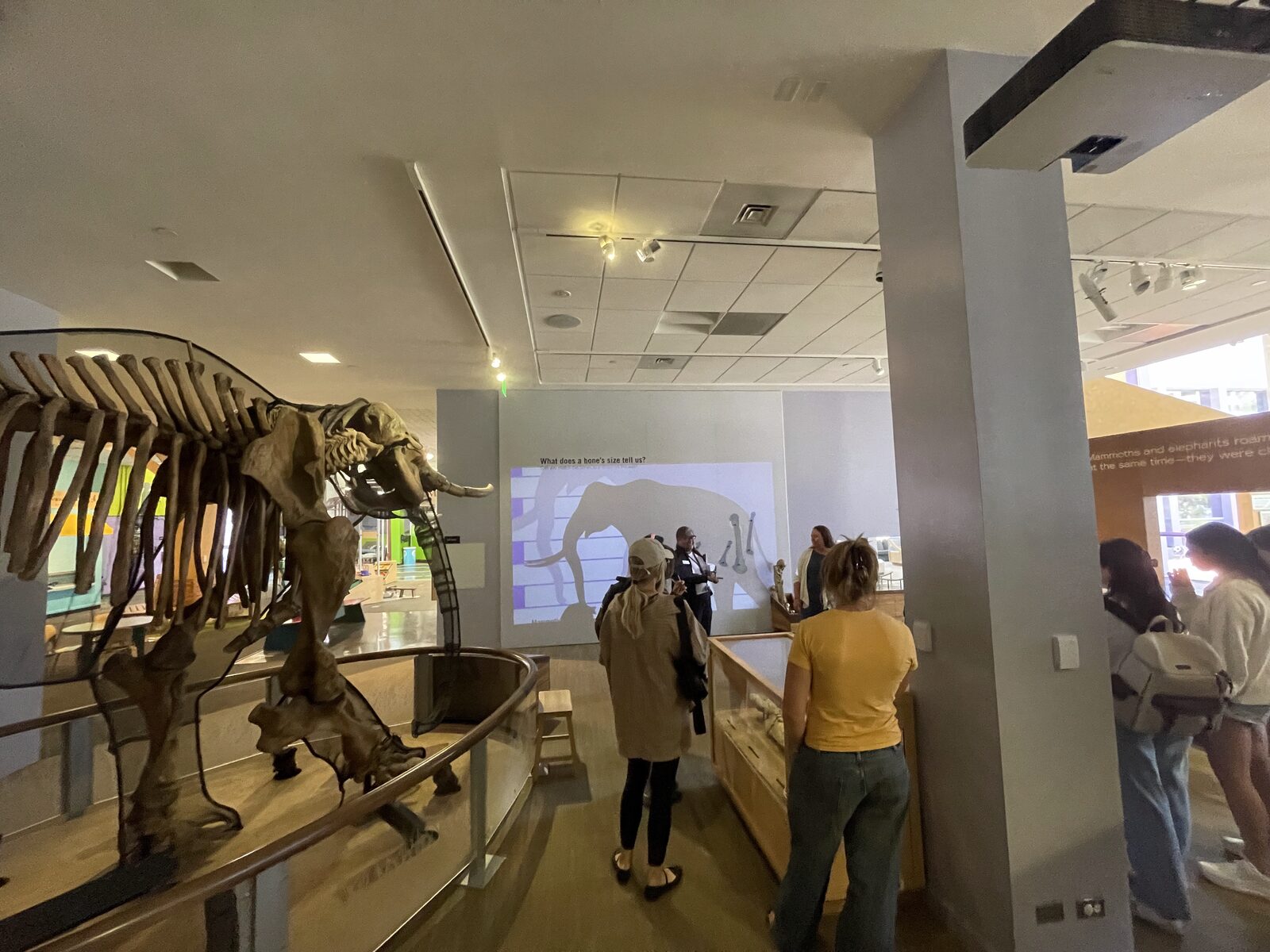
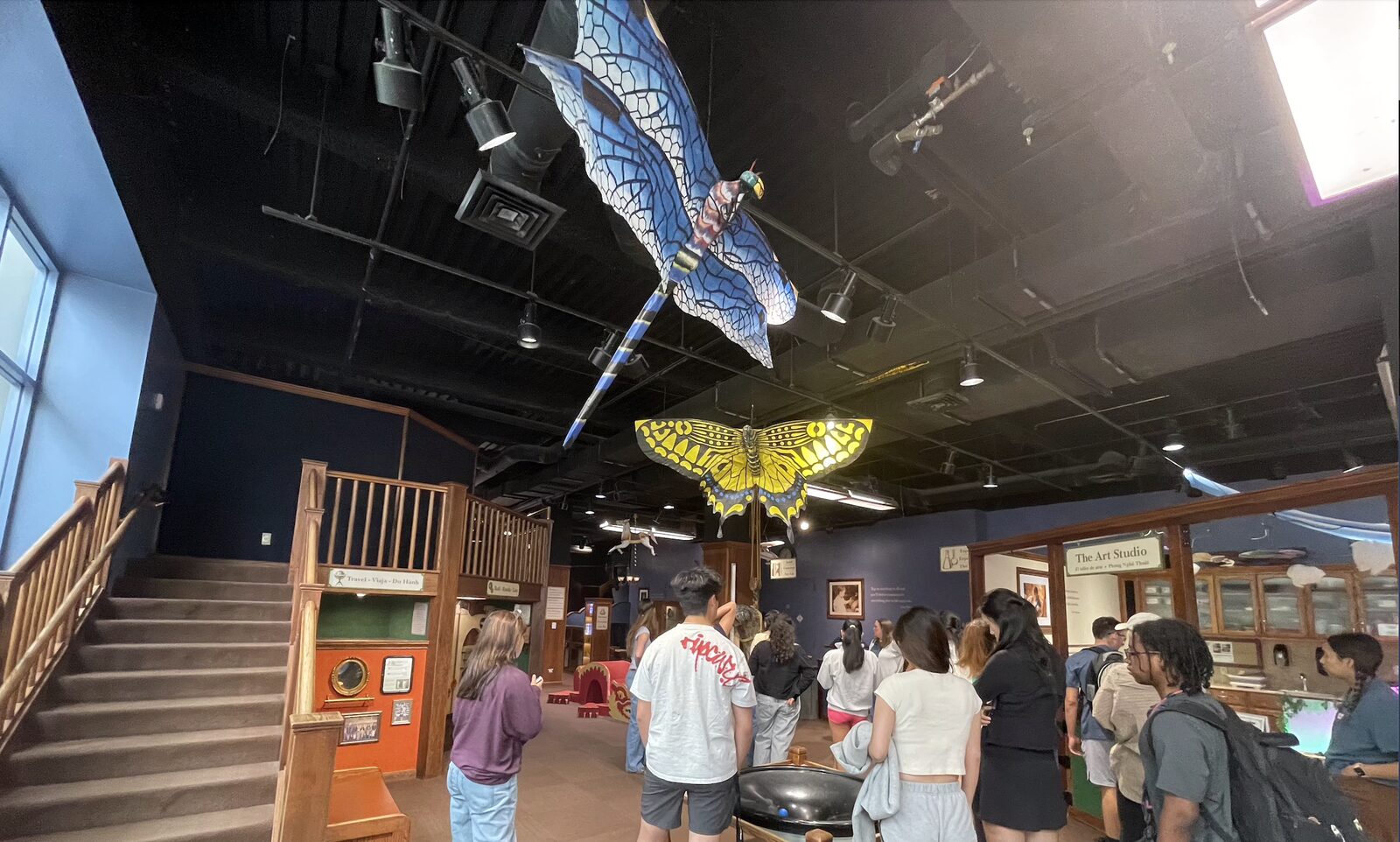
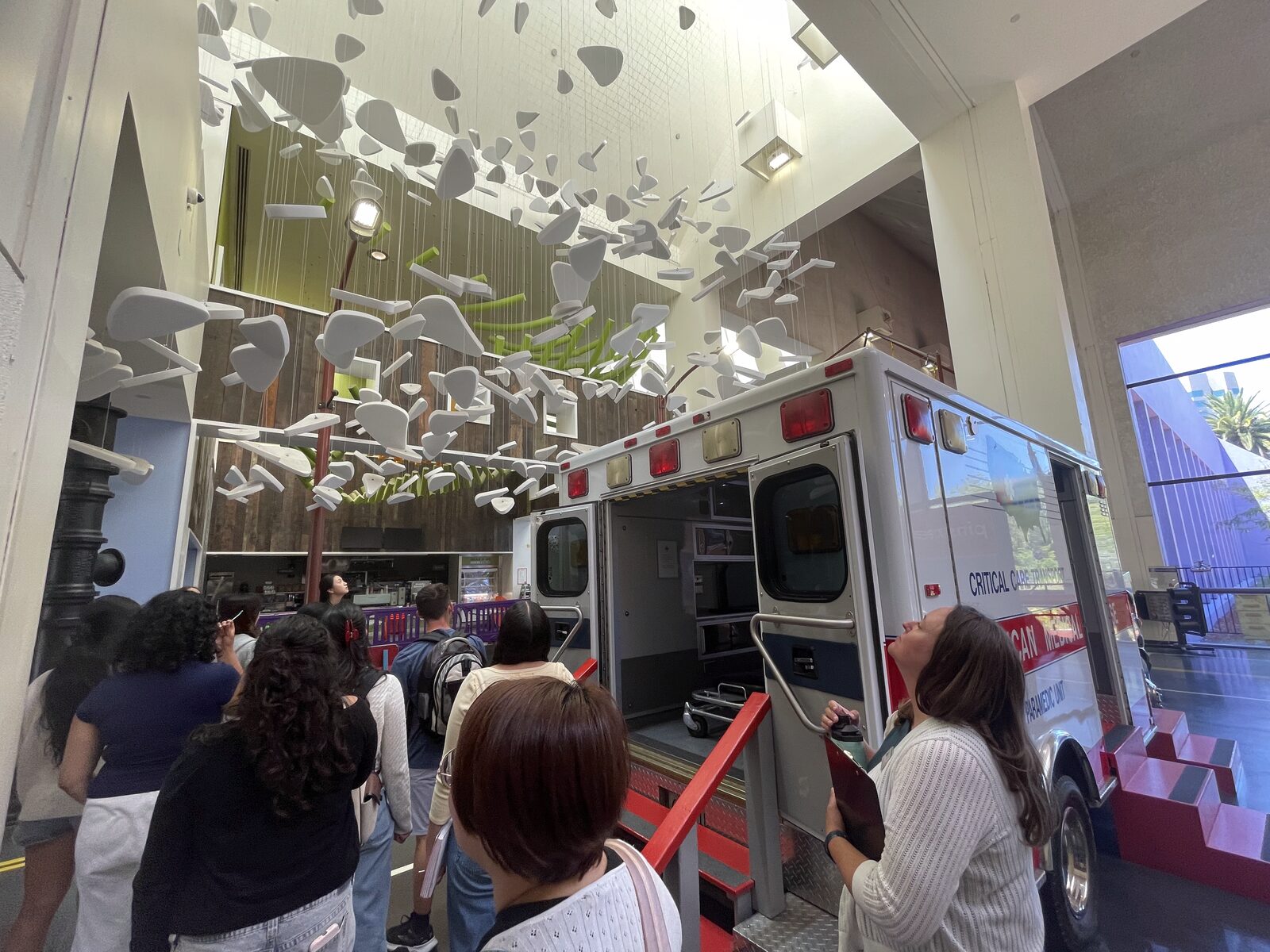
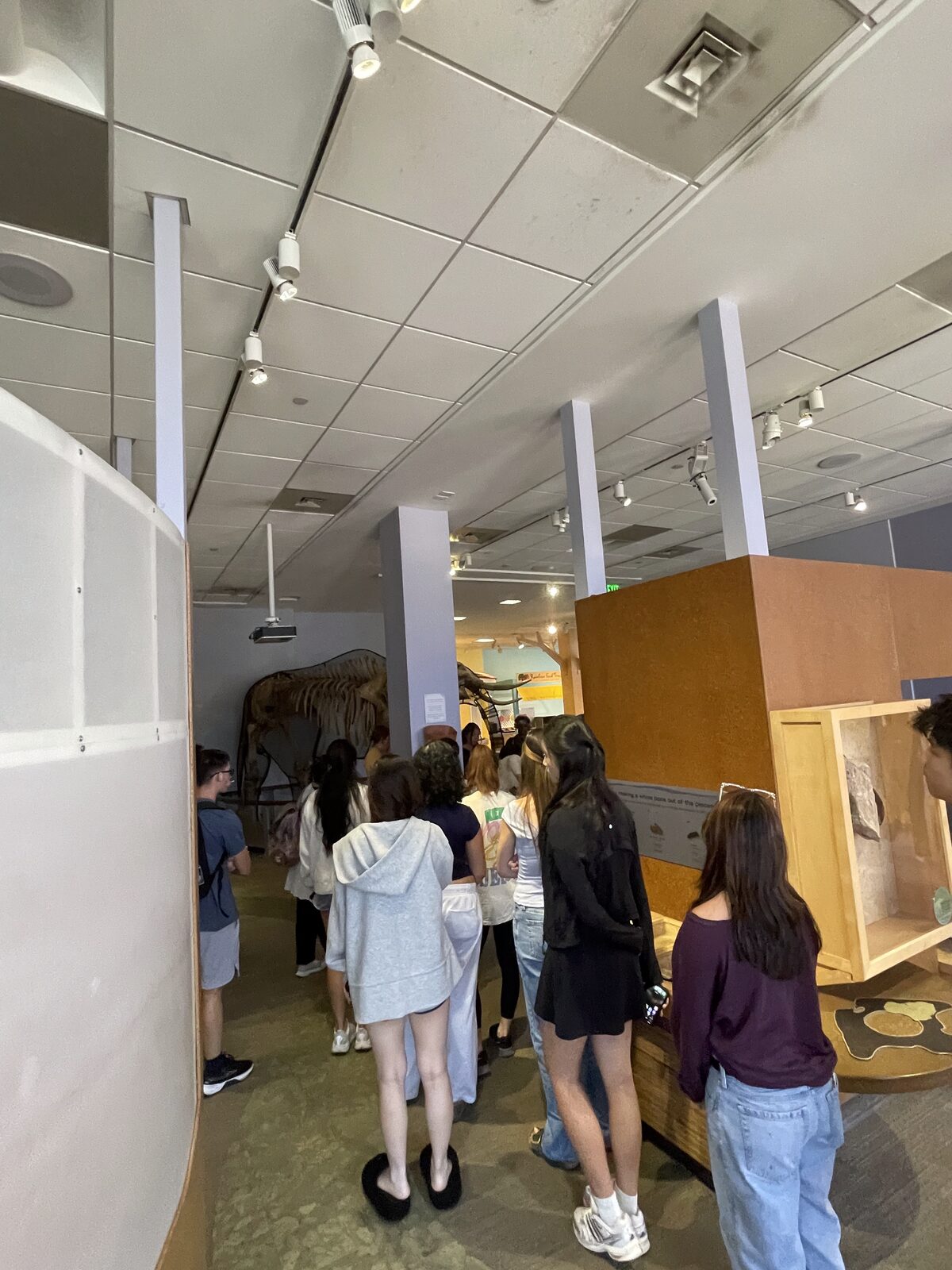
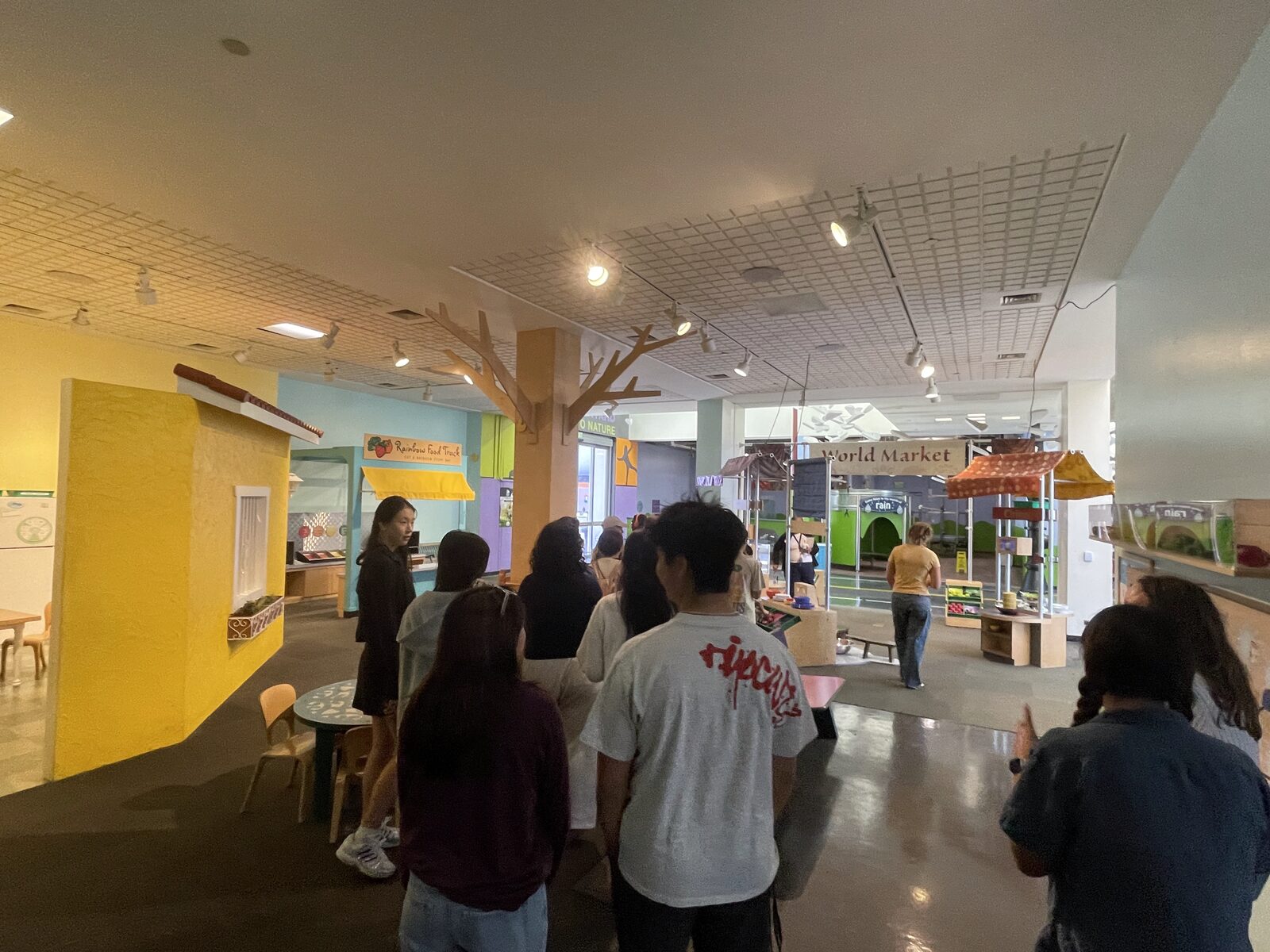
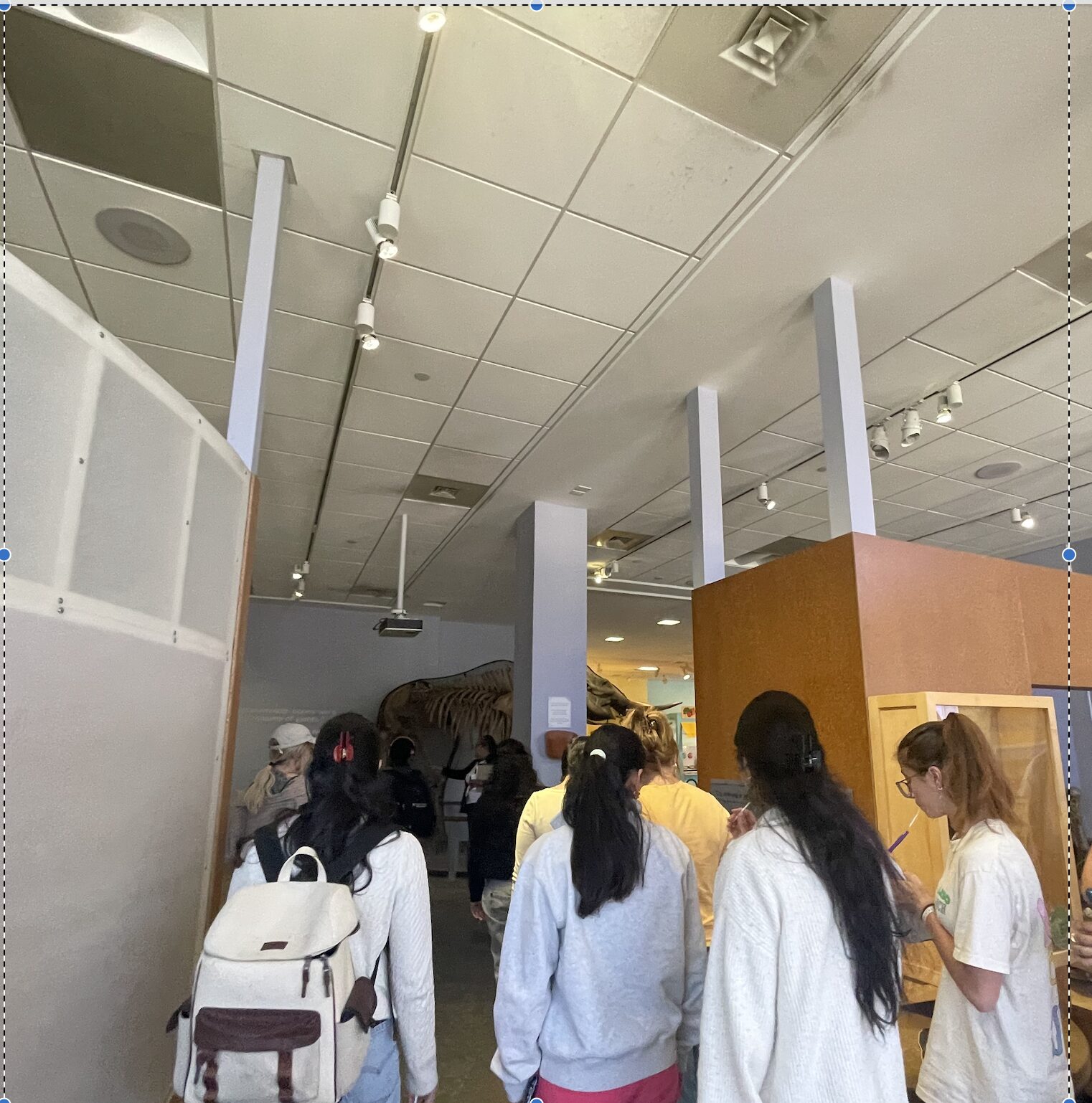
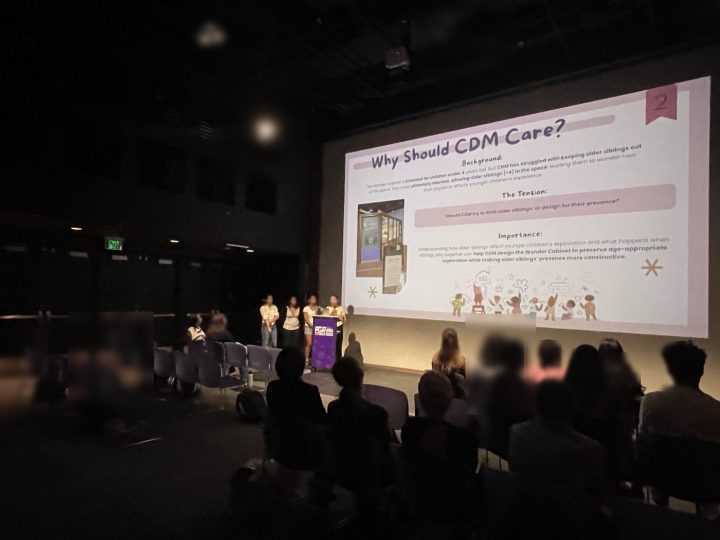
Students spend part of the term observing at the Children's Discovery Museum of San Jose in small teams, working on research questions the museum's education staff have asked us to help think through. It gives students a place to practice careful looking, honest description, and research communication with an audience that will read what they write.
From our orientation visit to the museum / July 6, 2026
How the course is taught
Class time is a mix of short lectures, in-class demonstrations of the studies we are reading, small-group discussion, and hands-on activities. Assessment is weighted toward the museum project and toward writing and speaking about research, rather than toward exams. Readings are short and chosen so that most of the intellectual work happens together in the room.
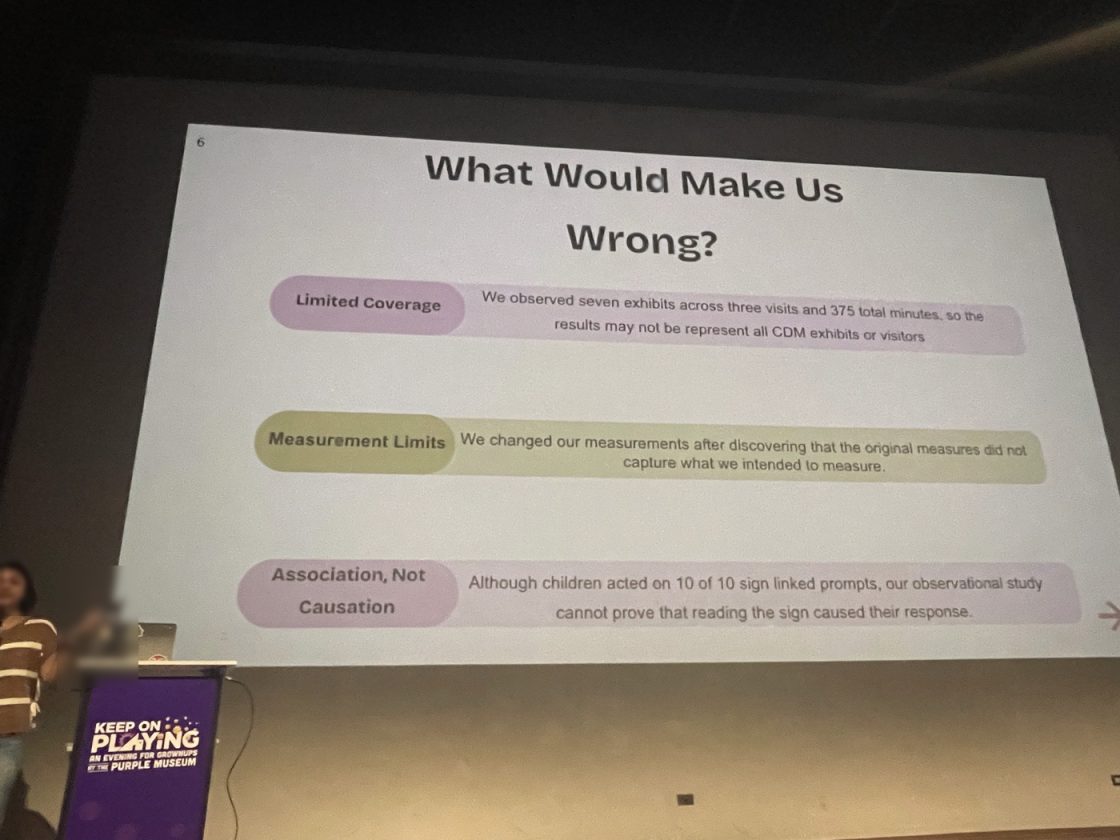
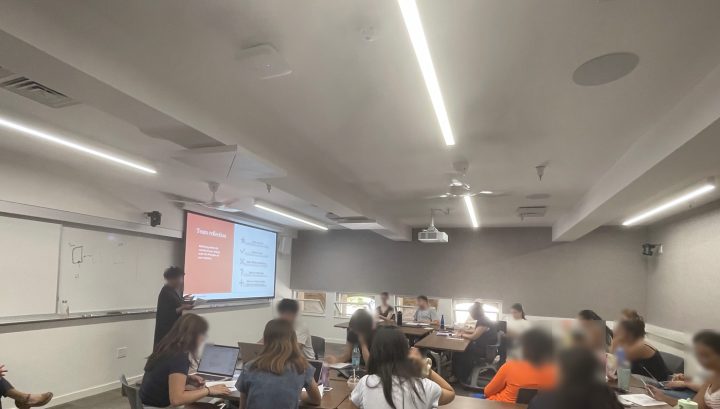
Faces and student names in these photographs have been blurred.
Questions about the course
If you are a prospective student, a colleague thinking about a similar course, or someone at a museum or school wondering how the community-engaged piece works, I am happy to hear from you: samahabd@stanford.edu.